August 6, 2026
Estimated reading time: 4 minutes
Nobody waits until the kitchen is on fire to figure out where the extinguisher is kept. Restaurants run fire drills. Hospitals run code drills. Airlines run evacuation drills. The one thing none of these industries do is wait for the real emergency to decide who does what.
Most small businesses in Tampa, St. Pete, and Clearwater don’t have that same instinct yet, at least not when it comes to their technology.
Backups aren’t a plan
Ask a business owner if they’re prepared for a ransomware attack or a server crash, and most will point to their backups, their antivirus software, or their IT provider’s monitoring tools. Those things matter. But they answer a different question than the one that actually determines how bad an outage gets.
The tools answer: can we recover the data?
The plan answers: who does what, in what order, starting the second something breaks?
Those aren’t the same question, and businesses that only answer the first one usually find that out the hard way.
What actually happens in the first hour
Here’s what a bad IT day looks like without a business continuity plan in place. A file server goes down, or a phishing email locks up a shared drive, or the internet drops mid-shift. Someone notices. They tell someone else. That person isn’t sure who’s supposed to make the call, so they start making phone calls to figure out who is.
Meanwhile, employees sit idle because nobody’s told them what to do instead. Customers who call in get vague answers because the front desk doesn’t know what’s actually happening. Managers start improvising a story for clients before anyone’s confirmed what’s true.
None of this is because the team is careless. It’s because nobody decided any of it in advance, so all of it gets decided live, under pressure, for the first time.
Same outage, two very different afternoons
We’ve supported businesses through server failures, ransomware attempts, and internet outages that shut down entire operations for a stretch. The technical side of the incident often looks similar across clients. What separates a rough morning from a lost week is almost never the technology. It’s whether anyone had already decided what happens next.
The businesses that come out ahead have already answered a short list of questions before anything ever breaks: who’s in charge the moment something goes wrong, what gets restored first, what staff should do while systems are down, and what the front-facing team says to a customer who calls asking why the website is down.
The businesses that struggle are answering those same questions live, for the first time, while the clock is already running.
A business continuity plan isn’t a binder nobody reads
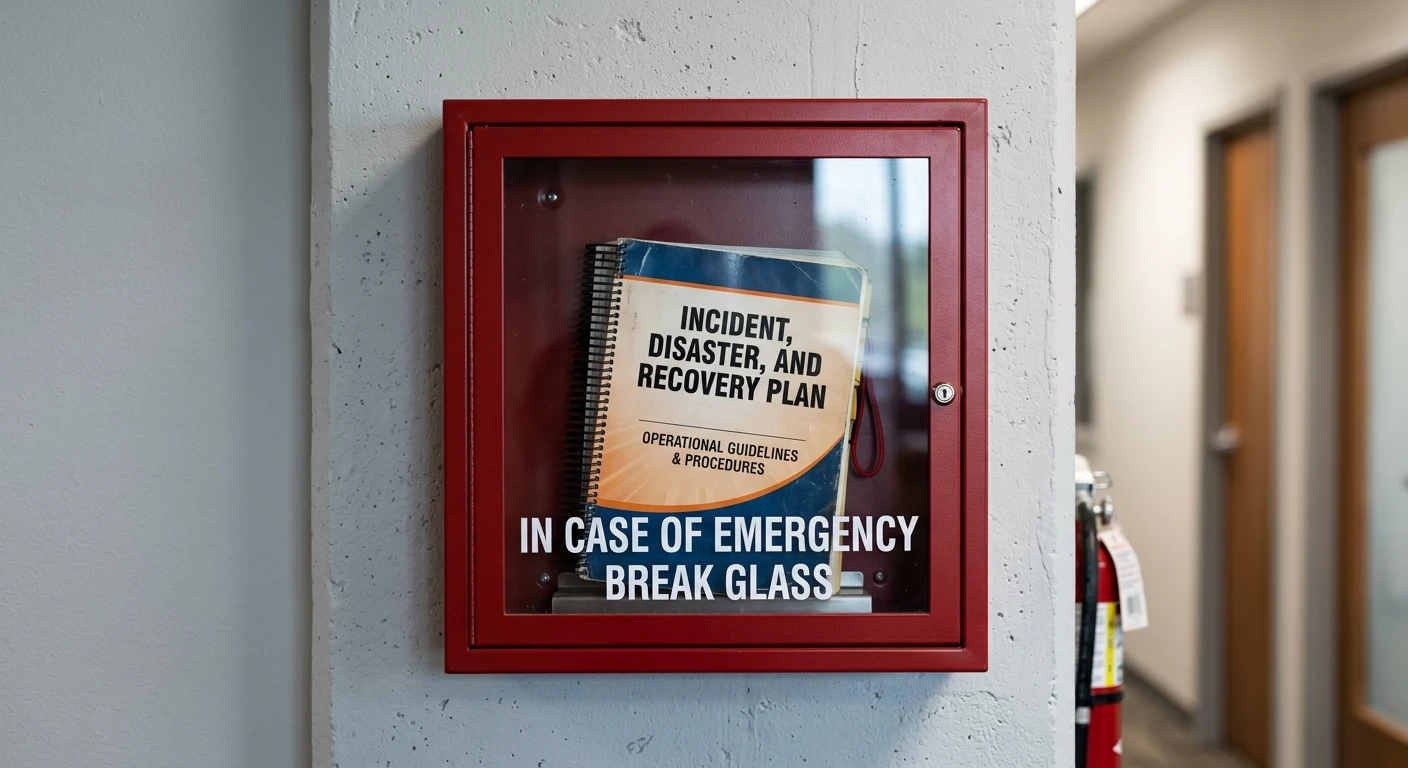
A real plan doesn’t have to be complicated. It needs to name a decision-maker, list a restore order for the systems that matter most, give staff something concrete to do during downtime, and give the customer-facing team language they can actually use. It should be short enough that someone can act on it under stress, and it should be tested, not just written and filed away.
That last part is where most plans quietly fail. A document that’s never been walked through is barely better than no document at all.
Where ShowTech fits in
We’re not just the people who get your systems back online. We help Tampa Bay businesses build the plan that decides what happens before the systems even go down, then we make sure that plan actually works when it’s needed.
Being ready doesn’t require the fanciest tools on the market. It requires knowing what you’ll do before you have to do it.
Find out where you actually stand
If your systems went down right now, would your team execute a plan, or start building one from scratch in front of your customers?
Schedule a 10-minute discovery call and we’ll walk through how prepared your business continuity plan really is, and where the gaps are before they turn into a bad afternoon.
Call us at (813)793-4700 or visit www.showtechsolutions.com.